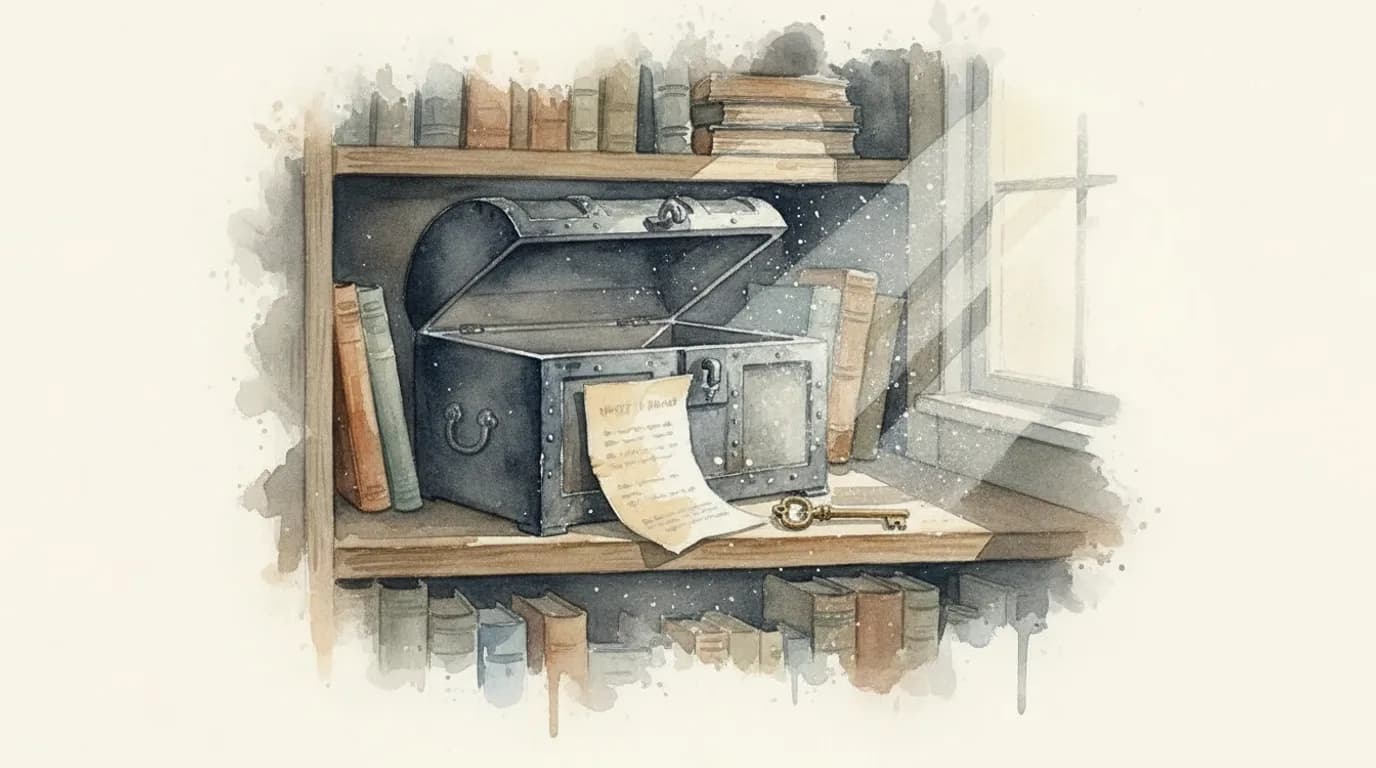
A will is one of the few documents where the physical original still rules. The Probate Registry requires the original signed will, not a photocopy or a scan. Worse, English law applies a presumption: if the original was last known to be in your possession and cannot be found after your death, the law presumes you destroyed it deliberately, revoking it. Your family does not just lose a piece of paper; they can lose the will itself.
The scale of the problem
The National Will Register has estimated that hundreds of thousands of wills go unfound at death, either lost outright or simply never discovered by the family, and around two thirds of people do not know where their parents’ wills are kept. Every one of those estates is administered as if the will never existed: the intestacy rules take over, and the people the will meant to protect can inherit nothing.
Your storage options, honestly compared
- At home. Free and instantly accessible, but exposed to fire, flood, loss and tidy-ups. If you choose home storage, use a fireproof box, and never attach anything to the will with staples or paper clips: marks that suggest a page was once attached invite questions at probate.
- With a solicitor or will-writing firm. Often free or cheap, professionally safe, and findable if your family knows which firm. The catch is tie-in: some firms treat storage as a pipeline to being appointed executor, and retrieving the will decades later, after mergers and closures, can be surprisingly hard.
- Your bank. Safe deposit storage is secure but slow after a death: banks generally will not open the box until probate is granted, and probate may need the will. That circularity has caught families badly.
- HM Courts and Tribunals Service. The Probate Service will store your will for a one-off fee of £20. Very safe, rarely used, and worth knowing about.
Storage is half the answer. Being findable is the other half.
Wherever the original lives, two further steps close the gap. First, tell your executors, in writing, exactly where the will is and how to reach it. Second, register the will’s existence and location with the National Will Register, the register searched by solicitors and probate professionals when they suspect a will exists. Registration does not store or reveal the contents; it simply means the will can always be traced to its location.
Keep copies, marked as copies
Copies are useful for reference, and dangerous when mistaken for originals. Mark every copy clearly as a copy, and note on it where the original is held. If you later replace your will, destroy the old original and every old copy you can find; a superseded will that resurfaces at probate causes exactly the confusion you would expect.
What Willful does by default
Every Willful will is registered with the National Will Register as standard, so it can always be found, and your signed will’s details, your asset list and your key documents live in an encrypted vault you can share with your executors in advance. The original stays wherever you choose to keep it; what we remove is the possibility that nobody knows it exists.