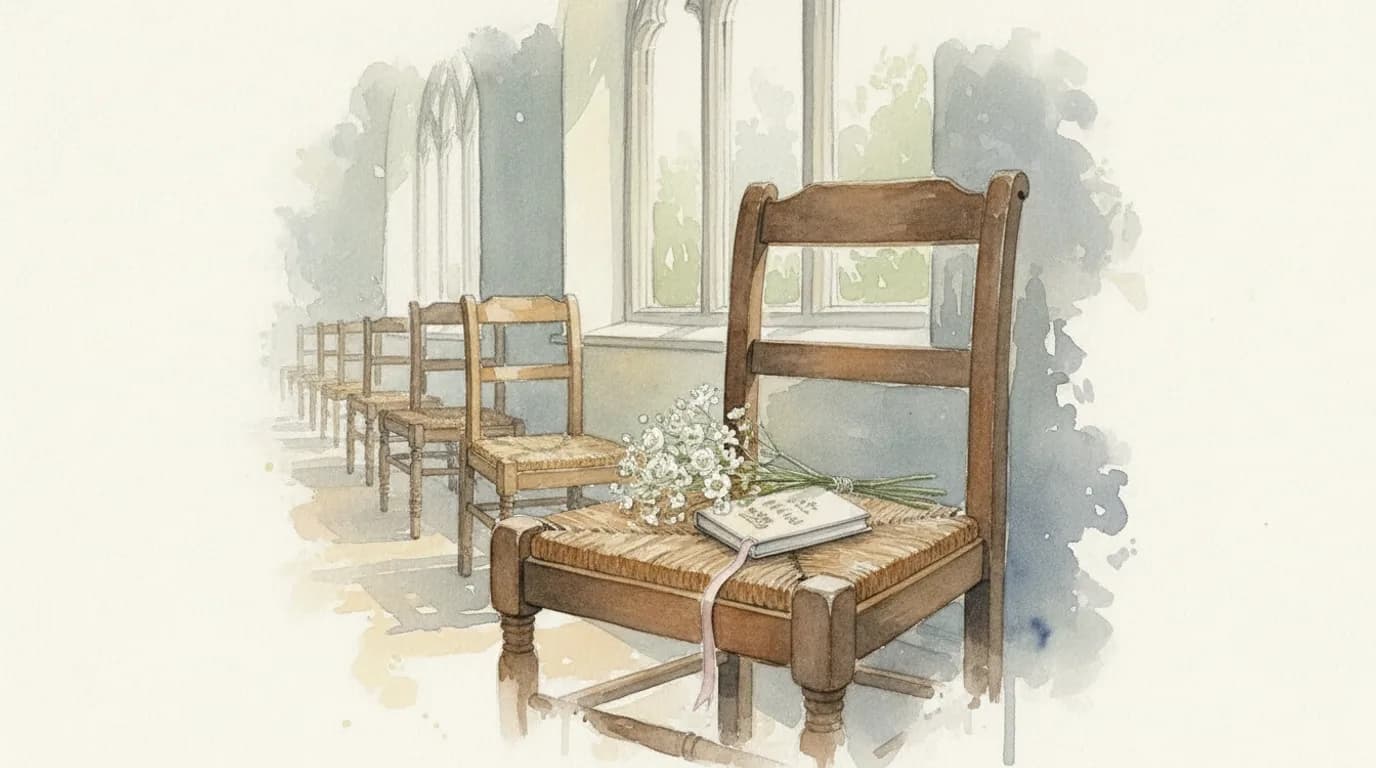
The order of service is the printed booklet handed to everyone arriving at a funeral. It does two jobs at once: on the day it is the programme, telling people what happens when and giving them the words to the hymns; afterwards it becomes the keepsake, the one physical thing many mourners take home and keep for decades. For something usually assembled in three days by exhausted people, it carries a lot.
The standard structure
There is no required format, but a century of practice has settled into a shape most services follow:
- Front cover: full name, dates of birth and death, a photograph, and the date and place of the service; some add a line like "A celebration of the life of"
- Entrance music: named, with the performer if it matters
- Welcome and opening words from the officiant or celebrant
- Hymns or songs, with the full lyrics printed so nobody mumbles
- Readings and poems, each with its reader’s name
- The eulogy or tribute, sometimes several short ones
- Prayers or a time of reflection, depending on the tone
- The committal (the formal farewell at a cremation or graveside)
- Exit music
- Back cover: a thank-you from the family, details of the wake or reception, and the chosen charity for donations
Choices that shape the whole booklet
The photograph sets the register: formal portrait or a laughing snapshot from a holiday. The music tells people whether to reach for tissues or smile; plenty of modern services enter to jazz and leave to football anthems, and nothing about the form forbids it. Length matters too: two hymns, two readings and one eulogy fills roughly thirty to forty minutes, which is what most crematorium slots allow. Order-of-service printing is usually arranged through the funeral director or a specialist printer within a day or two; print more copies than expected attendance, because people take spares for relatives who could not come.
Writing your own, in advance
Here is the quiet truth: the family assembling this booklet in three days is guessing. Which photograph you would have chosen, which hymn mattered, whether that poem was beloved or just familiar. If you record your funeral wishes while none of it is urgent, the order of service almost writes itself: your music, your readings, your photograph, their arrangement. You are not staging your own funeral; you are handing your family a draft so their three days can be spent grieving instead of guessing.
Willful’s Your Farewell feature was built for exactly this. It holds your wishes, music and readings as a living record, lets you attach the photographs you would want used, and can be shared with your executors and family before it is ever needed, alongside the will itself. The version they open on the hardest week is the version you actually wrote.
A few gentle rules from experience
- Print full lyrics and readings; half the room will not know the words to anything
- Name every reader and speaker; it honours them and keeps the running order clear
- Check names and dates twice; typos in this booklet get noticed and remembered
- Keep one copy safe for the family before the crowd takes them